It was the Japanese consulate. Hundreds of Jewish families, many of them refugees who had fled from Poland, stood at the gate day and night. War was spreading across Europe, and they were running out of places to go.
Inside was the vice-consul, a quiet 40-year-old man named Chiune Sugihara.
The refugees needed transit visas to travel across the Soviet Union to Japan, and from there to safety. But Japan’s rules were strict. A visa could only go to people with enough money and a visa for a final destination. Almost none of them had that.
Sugihara asked his government for permission three times. Three times, the answer was no.
He talked it over with his wife, Yukiko. “We understood that both the Japanese and German governments disagreed with our ideas,” she later said, “but we went ahead anyhow.”
From the end of July 1940, Sugihara began writing visas by hand.
He reportedly worked 18 to 20 hours a day, trying to write 200 to 300 visas a day, about a normal month’s work for the consulate. One teenager, Lucille Camhi, remembered how she and her sister begged him for help, telling him their father was dead. “He just stamped, gave us the visa right there on the spot,” she said.
In early September, the consulate was closed and Sugihara was ordered to leave. Even then he did not stop.
According to witnesses, he kept writing visas at his hotel and at the railway station. His son Hiroki later remembered his father still signing papers on the train, and throwing the last stamped passports out of the window to the people on the platform.
As the train pulled away, he bowed to the crowd. “Please forgive me,” he said. “I cannot write anymore. I wish you the best.”
Someone shouted back: “Sugihara, we’ll never forget you!”
He had issued more than 2,000 visas, and many of them covered whole families. Historians estimate he helped thousands of people escape, perhaps around 6,000. Today, tens of thousands of their descendants are alive because of him.
After the war, Sugihara was asked to resign from the foreign service. For years he lived quietly, at one point selling light bulbs door to door. Few people in Japan knew what he had done.
In 1968, one of the people he had saved finally found him. In 1984, Yad Vashem in Israel honored him as Righteous Among the Nations, the only Japanese person to receive that title.
When he was asked why he did it, his answer was simple. “I do it just because I have pity on the people,” he said. “They want to get out, so I let them have the visas.”
Chiune Sugihara died in 1986. Only when a large group of Jewish visitors from around the world came to his funeral did his neighbors learn who he really was.
Had you heard of Chiune Sugihara before today? Tell us in the comments.
More stories you might love
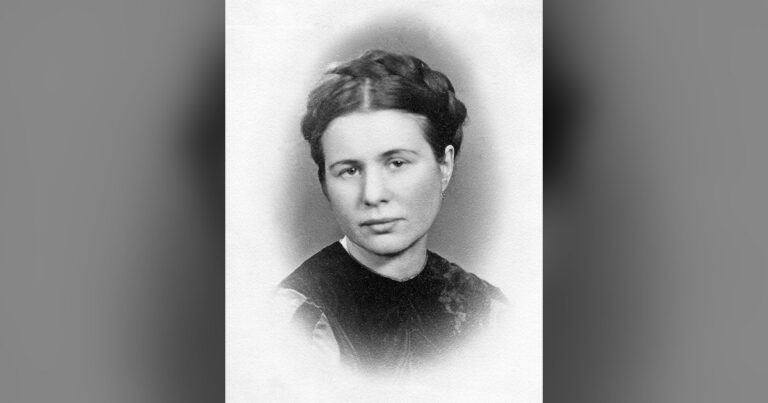 She Smuggled Jewish Children Out of the Warsaw Ghetto and Hid Their Real Names in Jars. Even Under Torture, She Never Gave Them Away
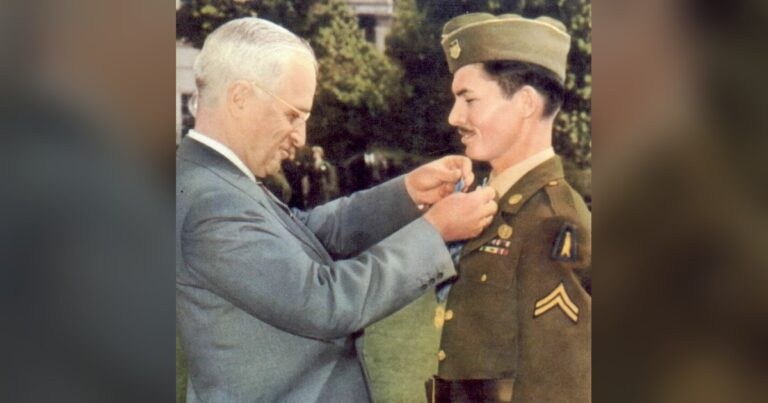 He Refused to Carry a Gun Into War, and the Other Soldiers Threw Shoes at Him. Then He Lowered About 75 Wounded Men Down a Cliff, One by One
 He Lied About His Age to Join Up at 15. Then “Papa Jake” Landed on Omaha Beach and Lived to Tell Millions