Willie Nelson was too shy to go inside.
It was late at night in Nashville in 1961. Willie was a young, broke songwriter with a demo tape of a song he had written. And the singer he hoped would record it was inside the house, about to hear it for the first time.
So Willie sat in the car and waited.
The singer was Patsy Cline. And the song was “Crazy.”
A song first called “Stupid”
Willie had written the song a few years earlier in Texas, back when he was juggling jobs to support his wife and three kids. He often wrote lyrics during his long drives to play in clubs at night.
He finished it in less than an hour. He first called it “Stupid.”
Back then, most country songs used three simple chords. Willie’s new song had many more, with a jazzy feel. Nobody seemed to want it. One record label passed because it didn’t think it would sell.
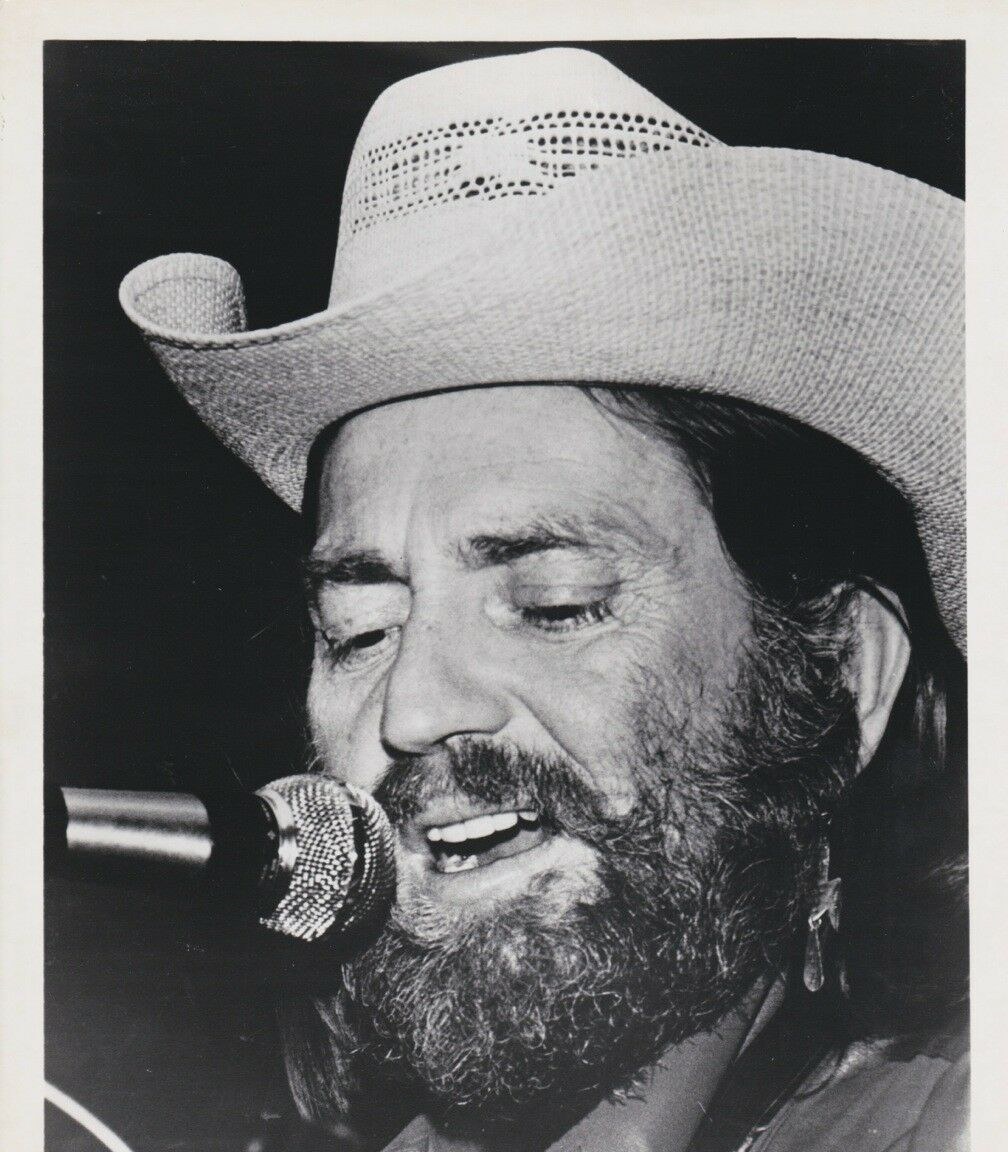
“Bring him in here”
Patsy wasn’t a fan of Willie’s songs at first. Her husband, Charlie Dick, had already brought her another one of his demos, and she didn’t like it.
There are a couple of versions of what happened next. In one, songwriter Hank Cochran drove Willie to Patsy’s house and played “Crazy” for her while Willie waited outside. In Willie’s own telling, it was Charlie who brought him home after midnight, and Willie stayed in the car because it was so late.
Either way, the story ends the same. Patsy heard the song and said to bring Willie inside. He taught it to her right there.
Still, she struggled with it. Willie sang slightly ahead of and behind the beat, almost talking his way through the words. Patsy found it hard to follow.
On crutches in the studio
There was another problem. In June 1961, Patsy had been badly hurt in a car accident. She spent more than a month in the hospital.
On August 21, 1961, she arrived at producer Owen Bradley’s studio in Nashville on crutches. Her ribs were still healing, and every long note hurt.
The session ran for four hours. The band, which included pianist Floyd Cramer and the Jordanaires singing backup, played beautifully. But Patsy couldn’t hold the notes. Finally, Bradley had the musicians record their part without her.
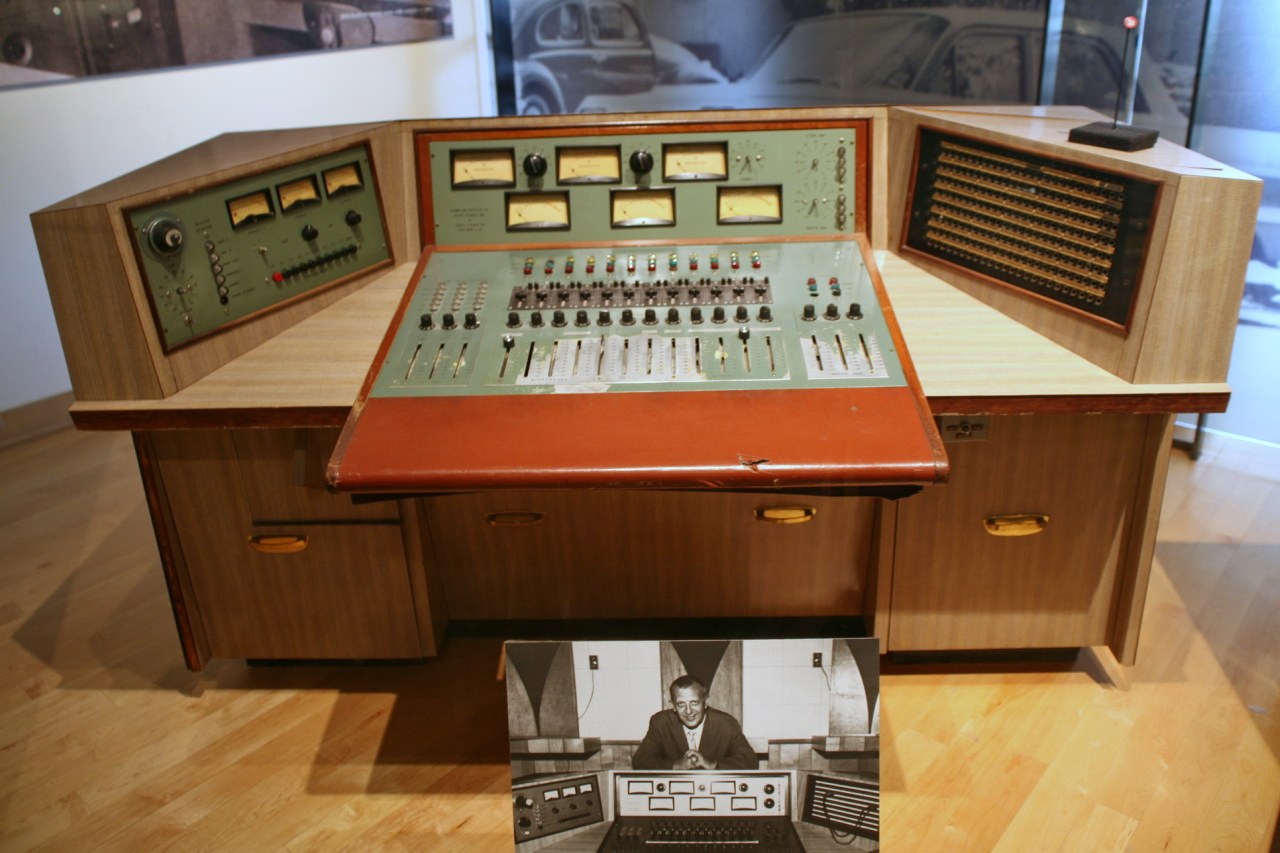
In those days, singers almost always recorded live with the band. Patsy considered it a sign of weakness to add her voice later. But this time, she had no choice.
One take
Bradley told her to forget Willie’s phrasing and sing it her own way.
When her ribs had healed a bit more, Patsy came back to the studio, stepped up to the microphone and sang “Crazy” over the band’s track.
She got it on the very first take.
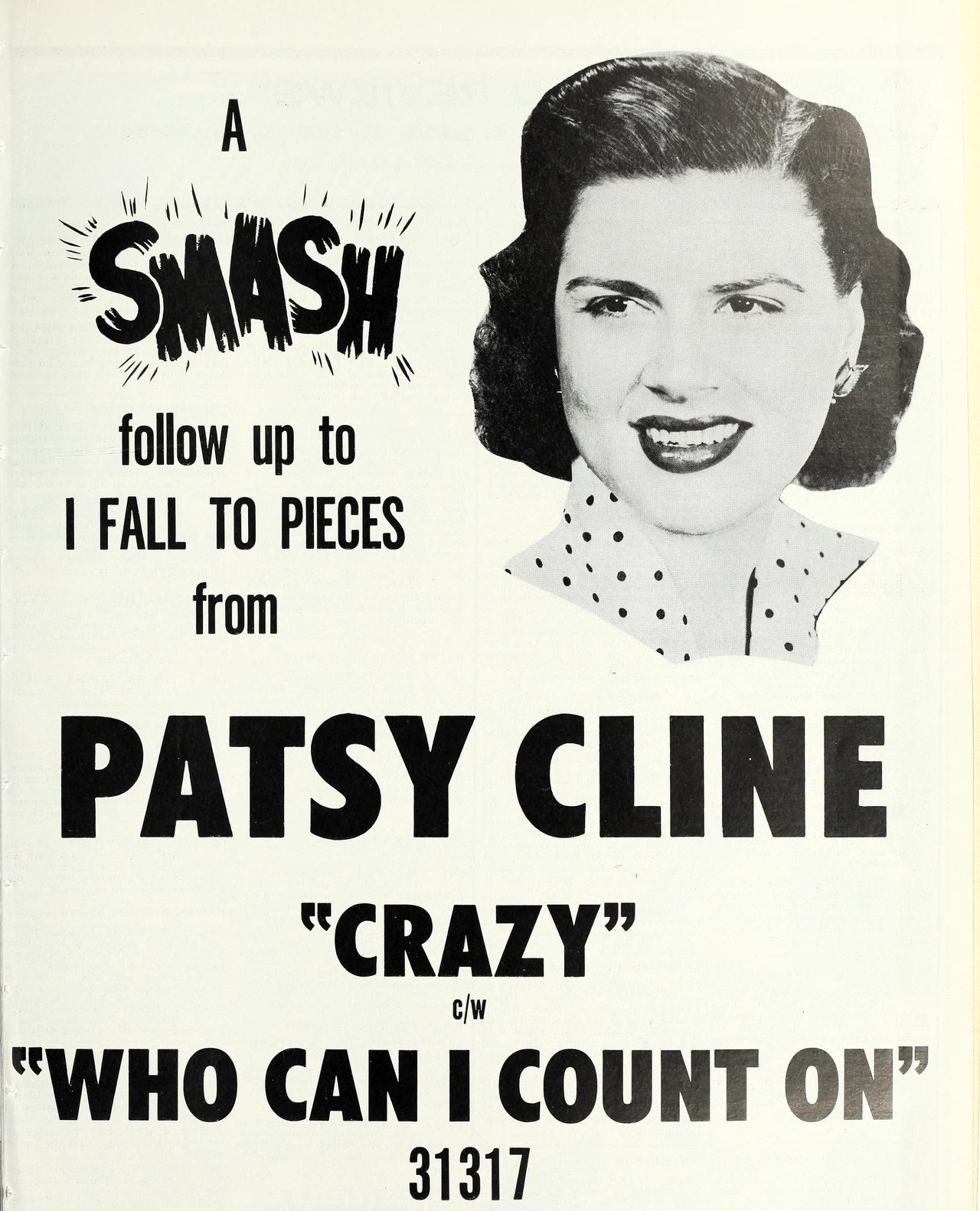
Released that fall, the song climbed to number two on the country charts and into the top 10 on the pop charts. In 1996, it was named the most-played song on jukeboxes in America, of all time. The Library of Congress added Patsy’s recording to its National Recording Registry in 2003.
Sadly, Patsy didn’t get to enjoy it for long. Less than two years later, in March 1963, she died in a plane crash at just 30.
Willie went on to become a legend himself. But he never forgot what she did with his little song. He has called her recording of “Crazy” his favorite of anything he ever wrote.
Listen to Patsy’s “Crazy” in the video above.
Images: Patsy Cline 1960 Decca Records publicity portrait, Willie Nelson RCA Records publicity photo, Willie Nelson 1974 Atlantic Records photo and 1961 Cashbox advertisement (all public domain via Wikimedia Commons); Quonset Hut console photo by Cliff, CC BY 2.0, via Wikimedia Commons.
More stories you might love
 Elvis Wanted to Record Her Song. Dolly Parton Said No and Cried All Night. The Story Behind “I Will Always Love You”
 Otis Redding Heard Her Version and Said, “She Done Took My Song.” The Story Behind “Respect”
 The Couple Who Wrote “Take Me Home, Country Roads” Had Never Been to West Virginia. They Finished It Overnight With John Denver, Who Had Just Broken His Thumb